lltra software.


10 Strategies to Immediately Improve Your Website

Introduction
Your website is often the first thing potential customers see, so it's worth getting right. Here are 10 effective strategies to improve it, whether your goal is better user satisfaction, more conversions, or higher search rankings:
1. Craft a Clear Message on Your Landing Page
Research reveals that most visitors will leave your website within 3 seconds if they can't understand what you offer[1]. Ideally, users should be able to answer these questions within the first 3 seconds:
- What do you do?
- How does it benefit me?
- How can I buy?
Let's consider a software agency like ours. It's straightforward: We develop software to help businesses create exceptional digital products.
To illustrate, let's examine a negative example from one of our competitors:

If you landed on this website, would you stay? Chances are, you'd leave because you can't grasp what they really do (software development) or how they can assist you.
Now, let's compare this with our own landing page:
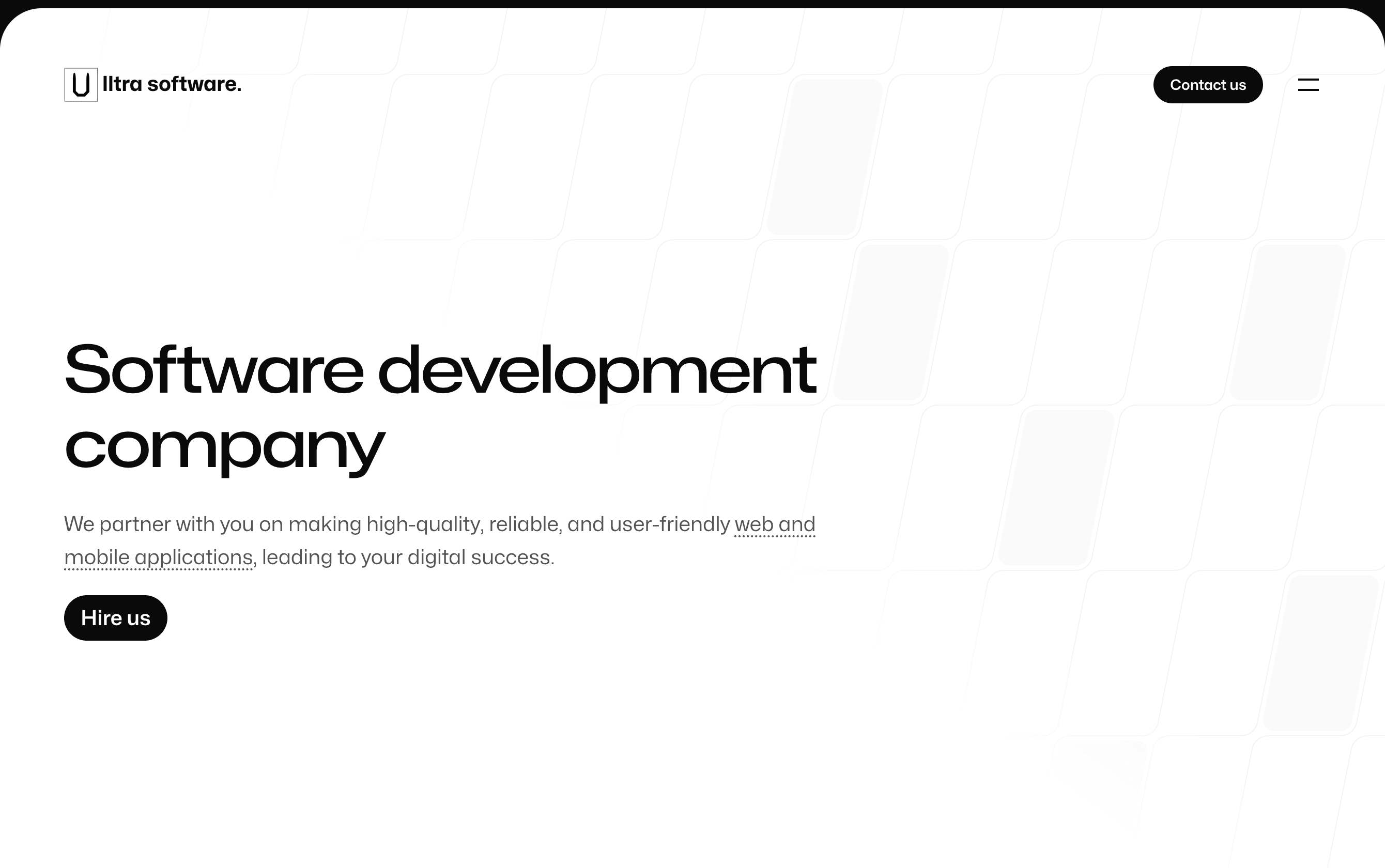
- What do you do? - We develop software, especially website, webapps and mobile apps.
- How does it benefit me? - We help you succeed with your digital ideas.
- How can I get started? - Click the button below.
Top tip
In the future, try applying these criteria whenever you visit a website. You'll be surprised by how many websites disregard these simple guidelines.
2. Optimize Website Speed
Slow-loading websites frustrate users and push up bounce rates. Compress images, minimize code, and use caching to speed things up. A faster website improves user experience and helps your SEO ranking.
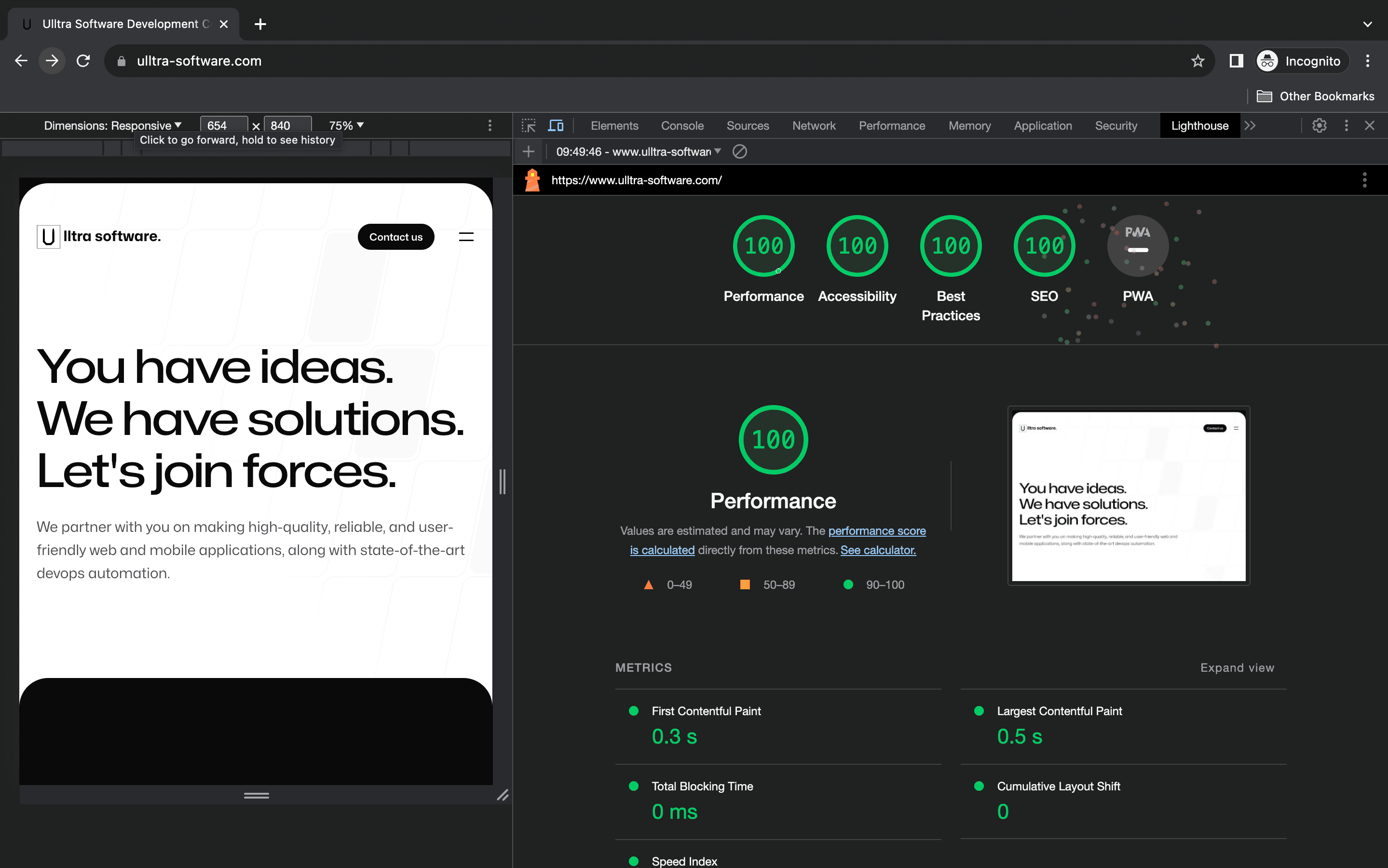
How can you achieve this? It's actually quite simple with Google Chrome Lighthouse: Right-click on Chrome -> Inspect -> Select Lighthouse in the tabs -> Analyze page load.
Here's an example from our website, ulltra-software.com. If any issues arise, Lighthouse will provide recommendations to enhance your speed:
3. Responsive Design
People browse from phones, tablets, and desktops. Make sure your website adapts cleanly to different screen sizes so the experience stays consistent across all of them.
Top tip
After installing Google Analytics on your website, monitor the percentage of users who access it via mobile devices. If the majority use desktop (common for data-intensive web apps), this point becomes less critical.
4. Clear Navigation
Simplify your website's navigation by logically organizing content and using clear labels for menu items. Visitors should quickly find what they're seeking. A well-structured navigation menu boosts user engagement and encourages exploration.
5. Compelling Visuals
High-quality images, videos, and graphics make your website more appealing. Good visuals grab attention and communicate your brand's personality faster than text alone.
Top tip
Obtain stunning, royalty-free images from sites like Pexels or Unsplash.
6. Engaging Content
Create valuable and relevant content that resonates with your target audience. Blogs, articles, and videos addressing their pain points or offering solutions keep visitors engaged and encourage prolonged site visits.
7. Effective Call-to-Action (CTA)
Strategically place clear and compelling CTAs throughout your website. Whether it's encouraging users to sign up for a newsletter, request a demo, or make a purchase, well-designed CTAs guide users toward desired actions.
Follow these guidelines:
-
Clear Text: Use action-oriented language for your CTA buttons, such as "Buy Now" or "Sign Up."
-
Contrasting Design: Make the button stand out with a color that contrasts well with the page's background.
-
Visible Placement: Position the button where users naturally look and keep its placement consistent.
8. A/B Testing
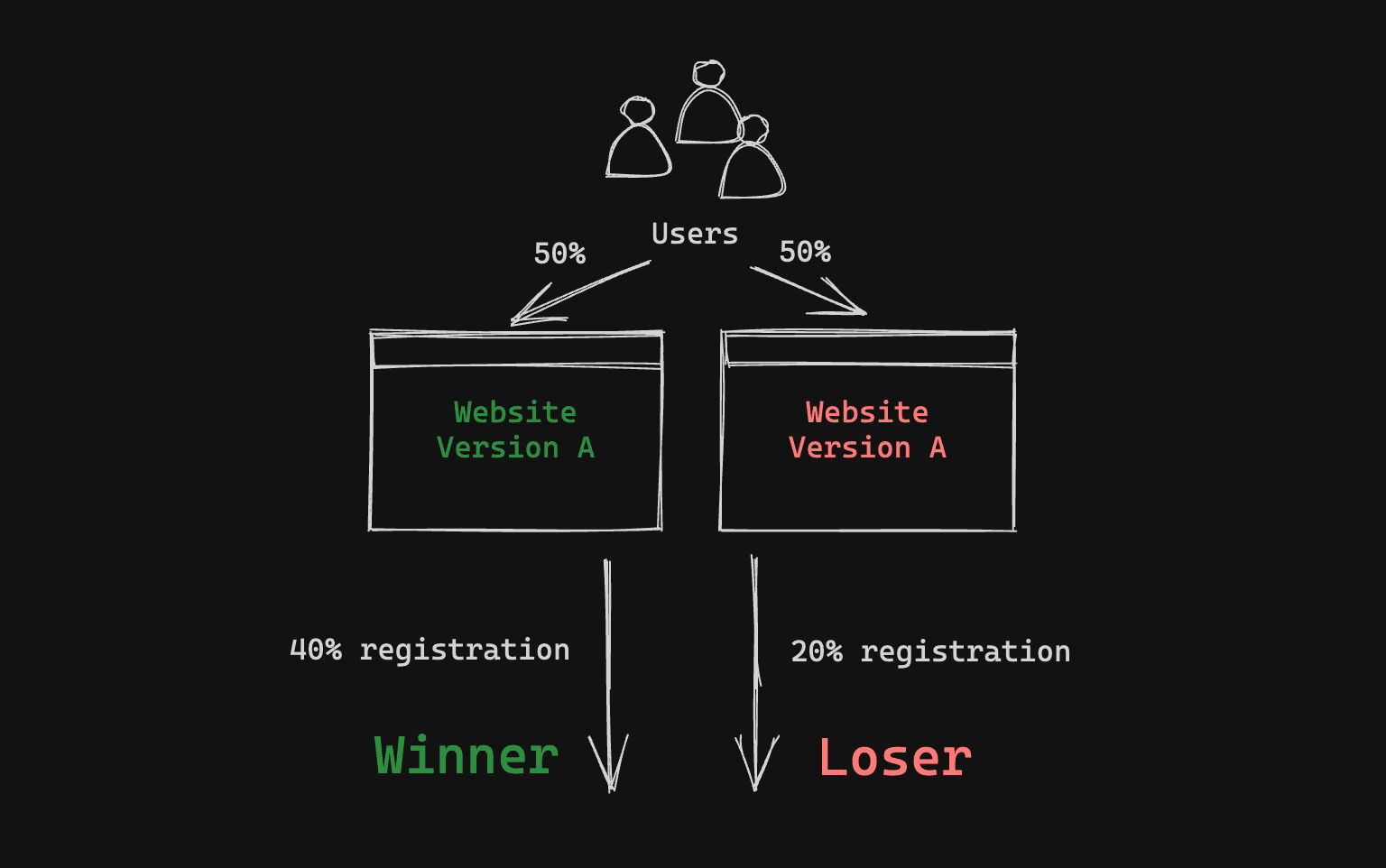
A/B testing lets you compare two versions of a webpage to determine which one users prefer and interact with more.
See above image: You send half of your users to one version of your website (A) and the other half to another version B. You then count which version gets more user registrations. In this case A is the winner, so you choose this website version.
Implement A/B testing to experiment with various website elements like headlines, colors, and CTAs. This data-driven approach helps identify what resonates best with your audience, optimizing for conversions.
Here's a quick rundown:
-
Goal: Identify what needs improvement (e.g. registrations like in above image).
-
Change: Create two versions of the webpage - the original (A) and a modified one (B).
-
Tool: Use an A/B testing tool like Google Optimize or Optimizely.
-
Setup: Input your webpage links and set the A/B traffic split.
-
Run: The tool displays different versions to visitors, collecting data.
-
Results: Determine which version performs better based on your goal.
-
Apply: Implement the superior version on your site.
-
Repeat: Continuously test and refine for ongoing enhancements.
9. Optimize for SEO
Boost your website's visibility on search engines by utilizing relevant keywords, optimizing meta tags, and building high-quality backlinks. A robust SEO foundation significantly increases organic traffic.
For a starting point, check out our blog post: SEO 101: Improve Your Google Ranking.
10. Security and Trustworthiness
Security matters. Install an SSL certificate to encrypt your website's data. Display trust signals like security badges, customer reviews, and a privacy policy to build credibility with visitors.
Top tip
11. Regular Updates
Keep your website current by consistently updating content, design, and functionality. Outdated websites can discourage users and convey a sense of neglect. Regular updates showcase your commitment to providing a valuable user experience.
Sources
- [1]Google / Marketing Dive (2017). Google: 53% of mobile users abandon sites that take over 3 seconds to load. Google's 'The Need for Mobile Speed' study; 53% abandonment rate for pages slower than 3 seconds
Conclusion
A well-optimized website drives real business growth. Prioritize speed, responsiveness, navigation, content, and user engagement, and you'll attract visitors and keep them coming back. Check your analytics regularly to track progress and adjust based on what users actually do.
Remember, your website is a dynamic entity, and continuous efforts to enhance it will yield enduring benefits for your brand and online presence.